
I’m a designer at Broadifi, and I keep noticing the same thing about AI generated design: so much of it looks alike. Scroll through any social feed and you’ll see posters, banners and app screens that are almost identical. Put two of them side by side, swap the logos, and you’d struggle to tell which brand is which.
Most of them were made with AI. And most of them were made in a hurry.
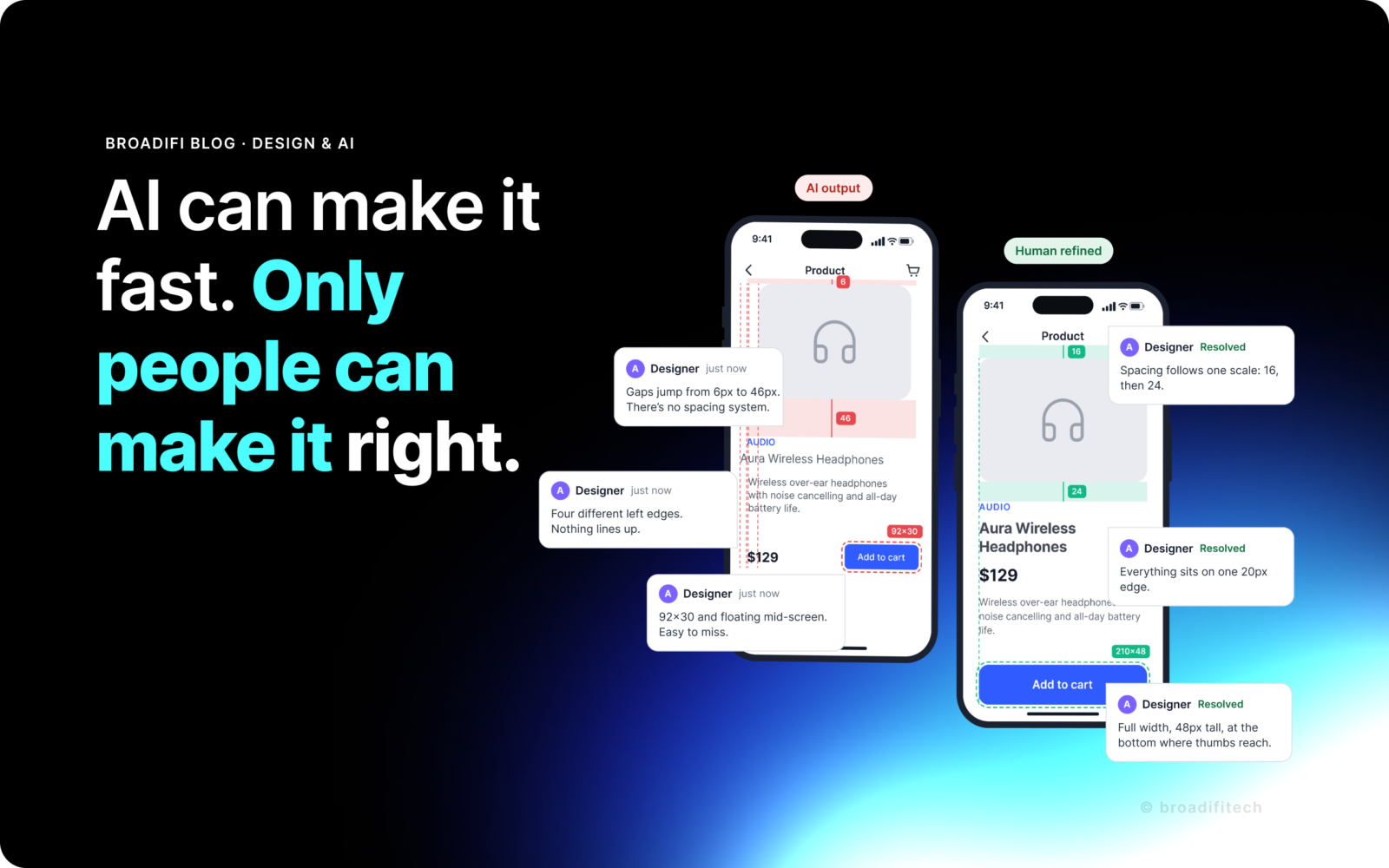
This isn’t an argument against AI, and it isn’t another AI vs human designers debate. I use AI every day in my design work, and it genuinely makes me faster. But I’ve also learned something important: AI can make things fast. Only people can make them right.
Why AI generated designs all look the same
AI tools learn from millions of existing images. When you give them a short prompt, they return what’s most common, most “average”, most safe. That’s why the first result often looks polished but generic. It’s also the simplest answer to why AI designs look the same.
The tool isn’t really the issue. The habit is:
Type a prompt → accept whatever comes back → publish it.
That skips the moment where a designer asks whether the work fits the brand, serves the audience and holds up when you look closely. Skip that step, and the work simply blends into everything else in the feed.
Where AI actually helps me
I’m not pretending AI isn’t useful. Used well, it saves me real time:
- Exploring many visual directions quickly at the start of a project
- Creating rough drafts, placeholder content and variations
- Summarising research and long documents
- Handling repetitive tasks like resizing, renaming and formatting
- Helping our developers write boilerplate code and find bugs faster
The time I save goes somewhere valuable: into thinking more carefully about the parts that actually matter.
What happens after the prompt
Here’s what most people don’t see. The prompt is a small part of my work. The rest looks like this:
- Understanding the user. Who will use this? What do they already believe? What will confuse them? AI doesn’t know your customers. People have to find out.
- Making decisions. Out of twenty options, which one is right, and why? What should be removed? Good design is often about saying no.
- Aligning with the brand. Adjusting colours, type, tone and imagery so it feels like your product, not anyone’s.
- Thinking about what goes wrong. What happens on a slow connection, a small screen, or when the user makes a mistake? AI rarely designs these moments on its own. A lot of my work is for people using tools at sea with patchy or no connection, so these moments are often the whole job.
- Testing and fixing. Checking that it works, reads well and is accessible. Then fixing what doesn’t.
- Making it real. For developers, AI-written code still has to be checked, connected to real systems, secured and maintained. A quick demo and a reliable product are very different things.
Each of these steps takes human judgement, and judgement takes time.
“Can’t AI just do it in a few minutes?”
It’s a fair question, and I hear it more often now. With so many AI tools around, it’s natural to expect design and development to take minutes instead of weeks.
The honest answer is: AI can produce something in minutes. But your product doesn’t need something. It needs the right thing, built for your users, your business and your goals.
The time a designer or developer spends after the prompt isn’t wasted time. It’s the time spent:
- Making sure your users don’t get confused and leave
- Catching problems before your customers find them
- Making your product feel like yours, not like everyone else’s
- Building something that keeps working after launch
That’s the part you’re really paying for, and it’s the part that protects your investment.
A real example from my work
We recently designed the landing page for SkillDrift, a career-success platform that universities use to guide students from profile to placement.
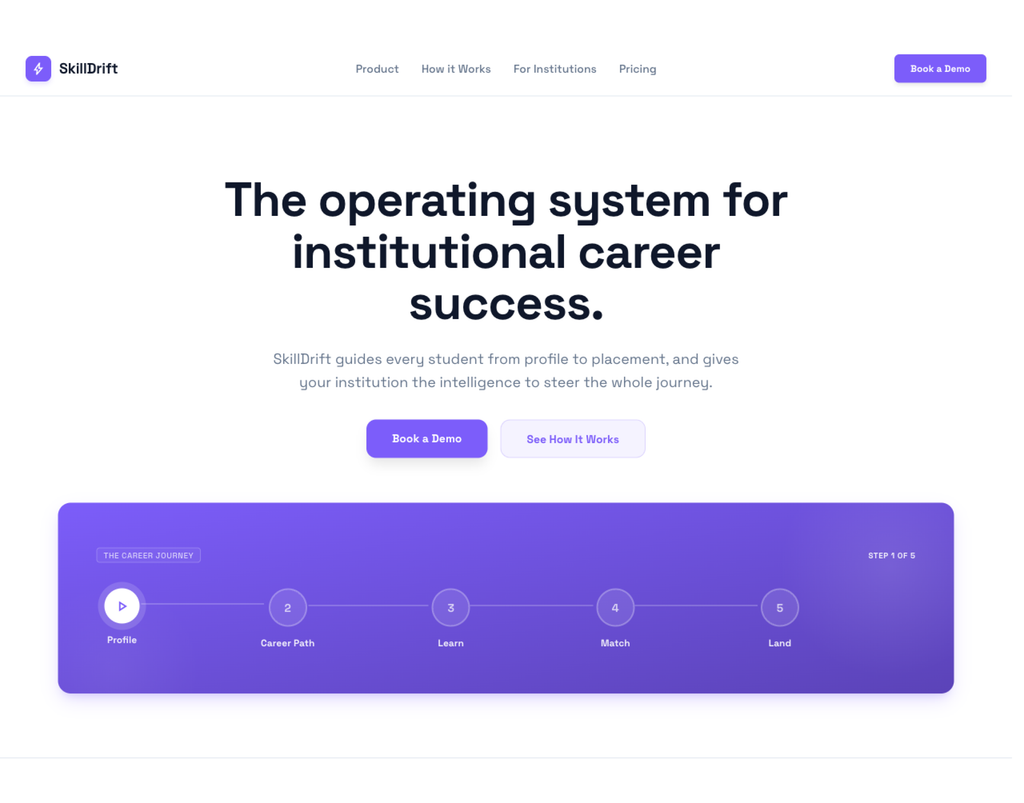
- What the AI gave me: Here’s what AI generated design looked like on one of my own projects. I already had the full brief, documents and content strategy, so I asked AI to create the first draft. At first glance, the result looked finished: a bold headline, two buttons and a purple career journey card. But look closer and it could belong to almost any SaaS product. Purple fills everything, the headline breaks across three heavy lines, and the journey card takes up most of the screen while saying very little about what SkillDrift actually does.
- What I changed and why:
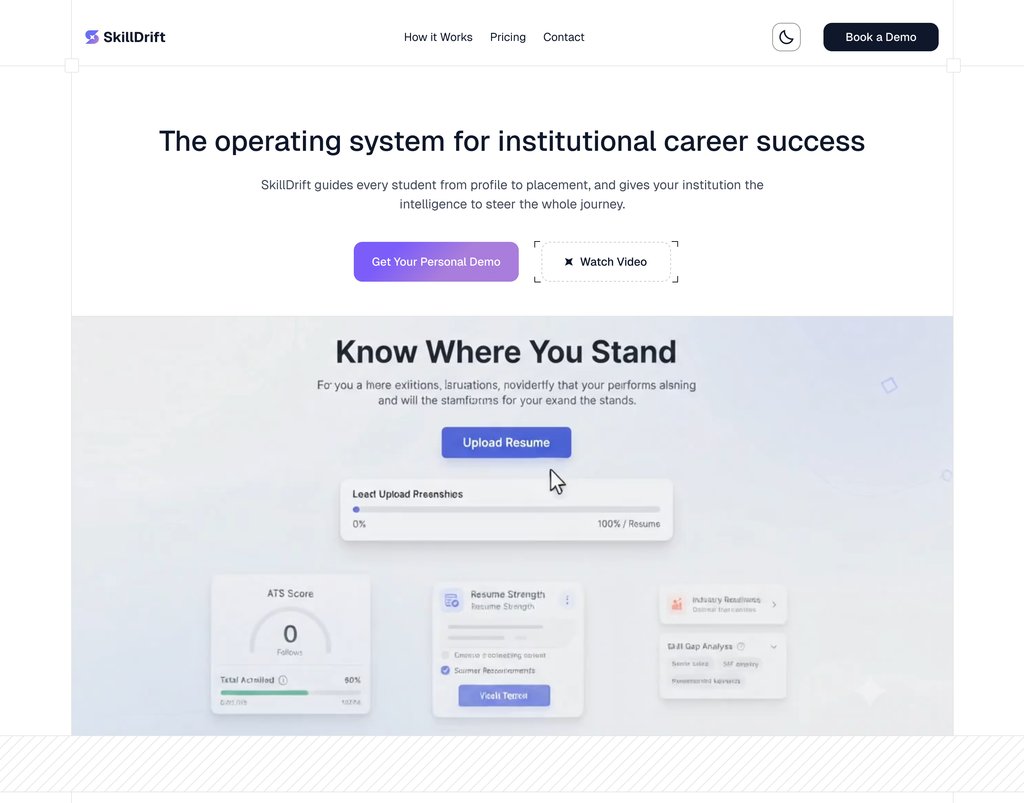
- Understanding the user. University placement teams are busy and usually comparing several tools, but the AI’s abstract journey card didn’t show them anything real. So we replaced it with a short demo video of the platform: uploading a resume, getting an ATS score and spotting skill gaps. In a few seconds, a visitor understands the whole product.
- Aligning with the brand. The AI flooded the page with purple, so nothing stood out. We made purple an accent for the main button only, so the eye goes where it should.
- Making decisions. The AI added more than the page needed. We cut the navigation from four links to three, brought the headline down to one line, and changed the main button to “Get Your Personal Demo” so people know exactly what they’ll get.
The result: The AI gave me a starting point in minutes. The final page took research, decisions and refinement, and now a placement team can see what SkillDrift does before they even scroll.
How we use AI at Broadifi
Our approach as a team is simple:
- AI for speed. First drafts, exploration, repetitive work.
- People for decisions. Research, judgement, refinement, quality.
- Never publish the first output. Everything gets reviewed, aligned and improved by someone who understands the project.
AI is our fastest assistant. It isn’t our designer, and it isn’t our developer.
The takeaway
AI has made it easier than ever to make something. It hasn’t made it any easier to make something good.
The products people remember are the ones that feel clear, trustworthy and human, and those still come from people who take the time to understand, decide and refine.
Fast is useful. Right is what lasts.
Building a product and want it done right, not just fast? Let’s talk.
